Once the design is approved and prepared for handoff, website development moves into the implementation phase. This is where strategy, structure, content, and design are translated into a fully functional website. Our goal during development is not only to build what was designed, but to build it efficiently, cleanly, and with long-term usability in mind.
Development environment
All websites are first developed on our dedicated development server. This allows us to work in a controlled environment without affecting the live website. It ensures safe experimentation, structured progress, and the ability to review the project internally before sharing it with the client. For version control and full traceability, we use our own Git-based versioning system. This ensures that changes are documented, reversible, and structured throughout the development process.
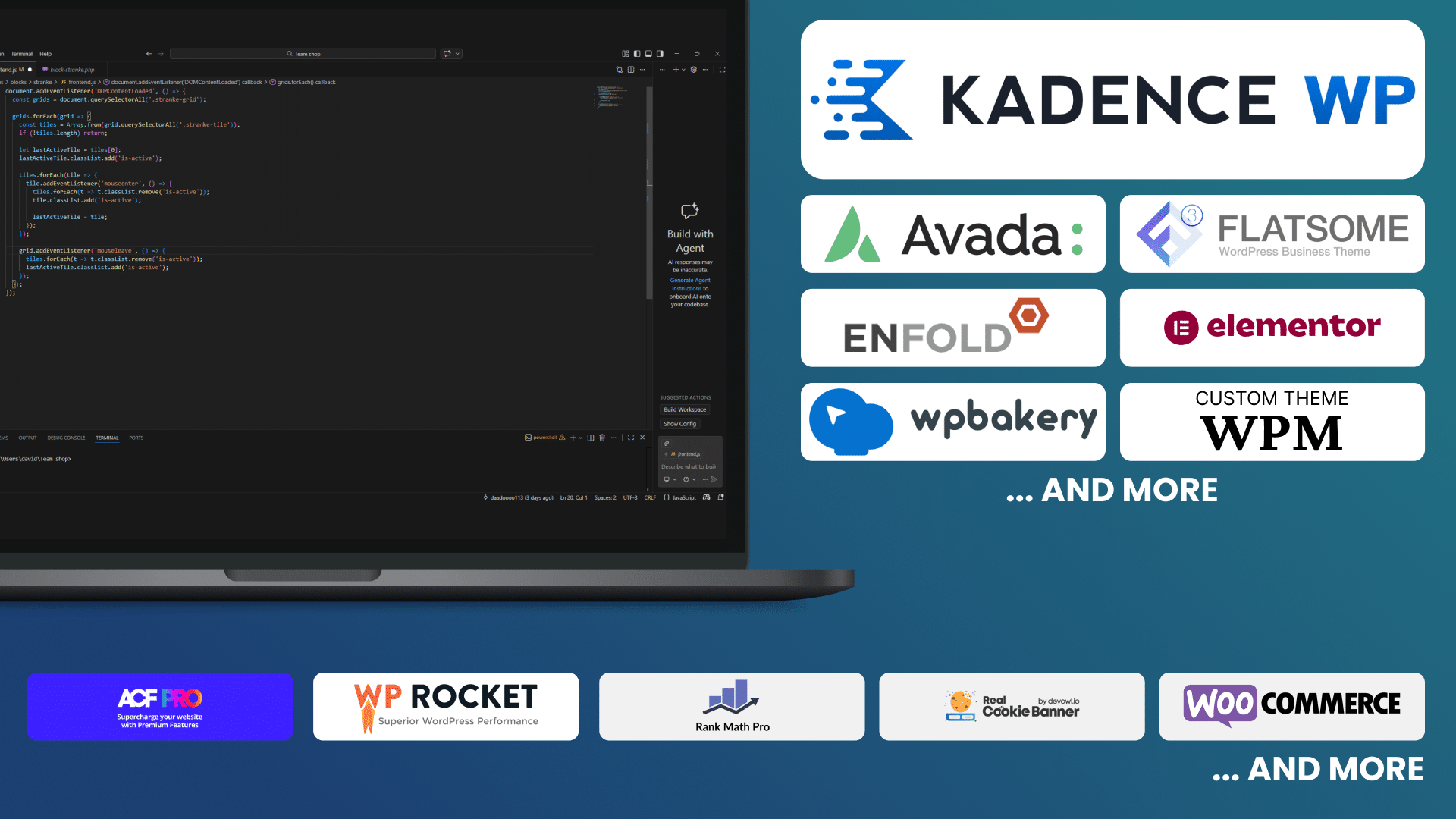
Then, depending on the project requirements, we determine the most appropriate technical approach. Our primary theme is Kadence Pro, which provides flexibility, performance, and scalability. We also have experience working with other themes and builders, including Flatsome, Elementor, Enfold, WP Bakery, and Avada, depending on client needs or existing systems. In more advanced or highly customized projects, we also develop fully custom themes, where WordPress is used purely as a CMS, while the frontend architecture and functionality are built entirely to match the project requirements. This approach allows for maximum flexibility, performance optimization, and long-term scalability.
However, regardless of the technical foundation, we typically use themes as a starting framework only. Most layouts and functionalities are structured and implemented to match the approved design while ensuring clean code, stability, and future extensibility.
Scalability and future-proof structure
Every website is built with scalability and flexibility in mind. Even if the initial scope is limited, the technical structure allows for future extensions and additional functionalities without rebuilding the system from scratch. On the other hand, optimization is not something we add at the end of the project. Performance is considered throughout the entire development process. This includes clean code practices, minimizing unnecessary scripts, optimizing assets, and preparing the website for strong Core Web Vitals performance.
Core plugins and project-specific tools
Each project includes a set of carefully selected core plugins that support performance, flexibility, and SEO readiness:
-
- WP Rocket – performance optimization and caching
- ACF Pro – structured and flexible content management
- Rank Math Pro – advanced SEO configuration
- Real Cookie Banner – GDPR compliance
Depending on project requirements, we integrate additional plugins such as WooCommerce for e-commerce functionality, WPML for multilingual websites, and other specialized tools as needed. Plugins are selected based on necessity, compatibility, and long-term stability — not trends.
Development in structured phases
Website development is carried out in clearly defined stages. We typically begin with the header and footer, as they form the structural backbone of the site. From there, the build order depends on the nature of the project:
-
- For e-commerce projects, we may begin with the product page and core shop functionality.
- For service-based websites, we often start with the homepage.
- In some cases, we prioritize key landing pages or fixed informational pages first.
This flexible approach ensures that the most critical components are built and validated early in the process.
Custom build approach
Although themes provide a framework, most of the website is built custom to the project’s needs. Special attention is given to user experience — both for visitors and for content editors. The backend is structured in a way that makes content management intuitive and efficient.
A website should not only look good — it should also be scalable, fast, and easy to manage.
Preparing for the next phase
By the end of the development phase, the website is functionally complete and technically structured. The next step involves quality assurance, testing, and validation before launch. In the next article, we’ll explore how we test, optimize, and prepare the website for go-live.
Send an inquiry