The first 30 days after launch are not a passive waiting period. They are a stabilization and validation phase, during which we actively monitor the website, observe real traffic behaviour, verify integrations and ensure that the production environment performs exactly as expected. During this period, we also provide free corrections within the scope of the existing infrastructure. This includes adjustments and fixes related to the agreed functionality, configuration inconsistencies or minor technical refinements identified after launch.
It does not include new feature development, structural redesigns or functionality outside the originally approved scope.
Once this one-month period concludes, we enter the final stage of the initial project lifecycle: structured handover and transition to a long-term maintenance model.
The 30-Day Review: Closing the Launch Phase Properly
After completing the quality assurance phase and executing a controlled production launch, we actively monitor the live environment for 30 days. During this period we validate indexing status, track error logs, observe real user flows and review performance data.
This final review ensures that:
- No hidden technical issues appear under real traffic conditions
- All integrations remain stable after going live
- Analytics and tracking data are correctly collected
- Security systems and backups operate as intended
Throughout these 30 days, any necessary adjustments within the approved scope are handled promptly to ensure full operational stability. Only once this validation phase is complete do we officially close the development project and move into the next structured step.

License Coverage: First Year Alignment
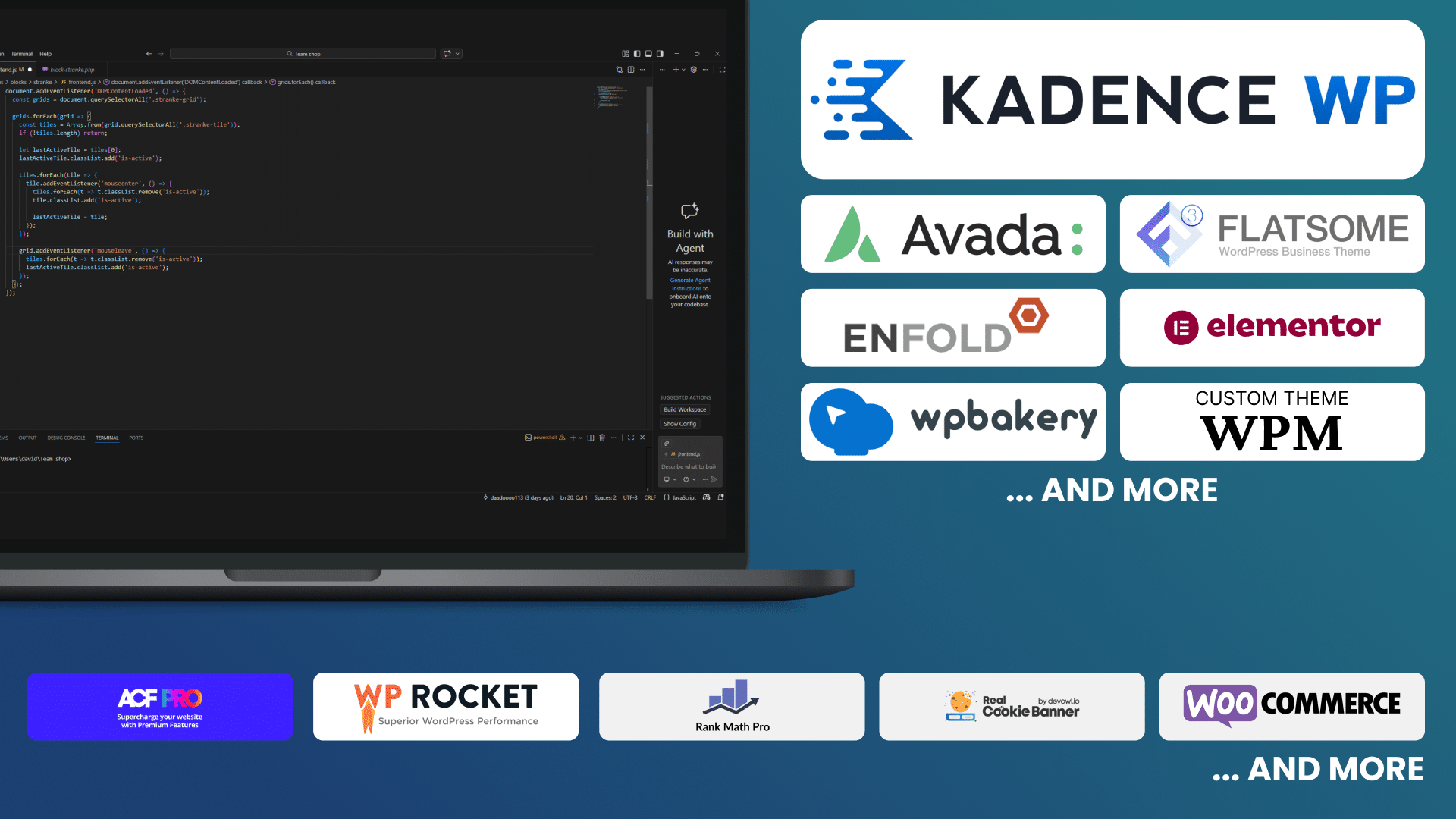
Premium plugin and theme licenses required for the website’s functionality are aligned during the project phase. Some licenses are included in the project price, while others may be billed separately, depending on the specific solution, vendor model and project scope. Our goal is to ensure that all software runs on legitimate, active and supported licenses from day one.
After the first year, there are three possible scenarios:
- The client subscribes to a WPM maintenance package, and we continue managing licenses under our centralized system (often with agency-level conditions where applicable).
- The client keeps maintenance but prefers direct license ownership, in which case renewals are transferred to their billing details.
- The client decides to manage everything independently, taking over renewals and technical responsibility.
We strongly recommend centralized license management, as described in our article on WPM license management. Active licenses are directly tied to security, compatibility and performance stability.
Transition to the WPM Maintenance Model
If the client chooses to continue with us, the website enters our structured WPM maintenance ecosystem. This means integration into our support, monitoring and automation infrastructure.
Maintenance at WPM is not reactive troubleshooting. It is a controlled operational model that includes:
- Regular updates and compatibility testing
- Security monitoring and daily backups
- Performance checks
- Structured support through our WPM Support Panel
- Transparent billing and tracked work hours
Depending on the complexity and type of the project, clients can choose between Maintenance Package S (for one-page websites), M, L or XXL. Each package is designed around response time, update frequency and support scope.
The key difference compared to independent management is accountability. Within our ecosystem, the website is continuously monitored, documented and proactively maintained.
From Launch to Long-Term Stability
A successful website is not defined by the day it goes live. It is defined by how stable, secure and adaptable it remains over time.The first 30 days ensure operational stability. The maintenance transition ensures long-term accountability. Together, they transform a finished project into a structured digital infrastructure. At WPM, we do not treat launch as an endpoint. We treat it as the beginning of responsibility.
If you want your website to remain secure, monitored and strategically aligned with your business growth, we are ready to support the next phase.
Send an inquiry