Once the initial meeting is complete and the project goals are clearly defined, website development moves into a more concrete and structured phase. This is where ideas and discussions are translated into a clear website structure and meaningful content. At this stage, we focus on two closely connected elements: defining the website’s tree structure and planning the content that will live within it.
Defining the website tree structure, a key part of website development
The first step is defining the tree structure of the website. This structure represents the backbone of the site — a hierarchical overview of all pages and how they relate to each other. The objective is straightforward: users should always know where they are, where they can go next, and how to find what they need, while the structure simultaneously supports business goals.
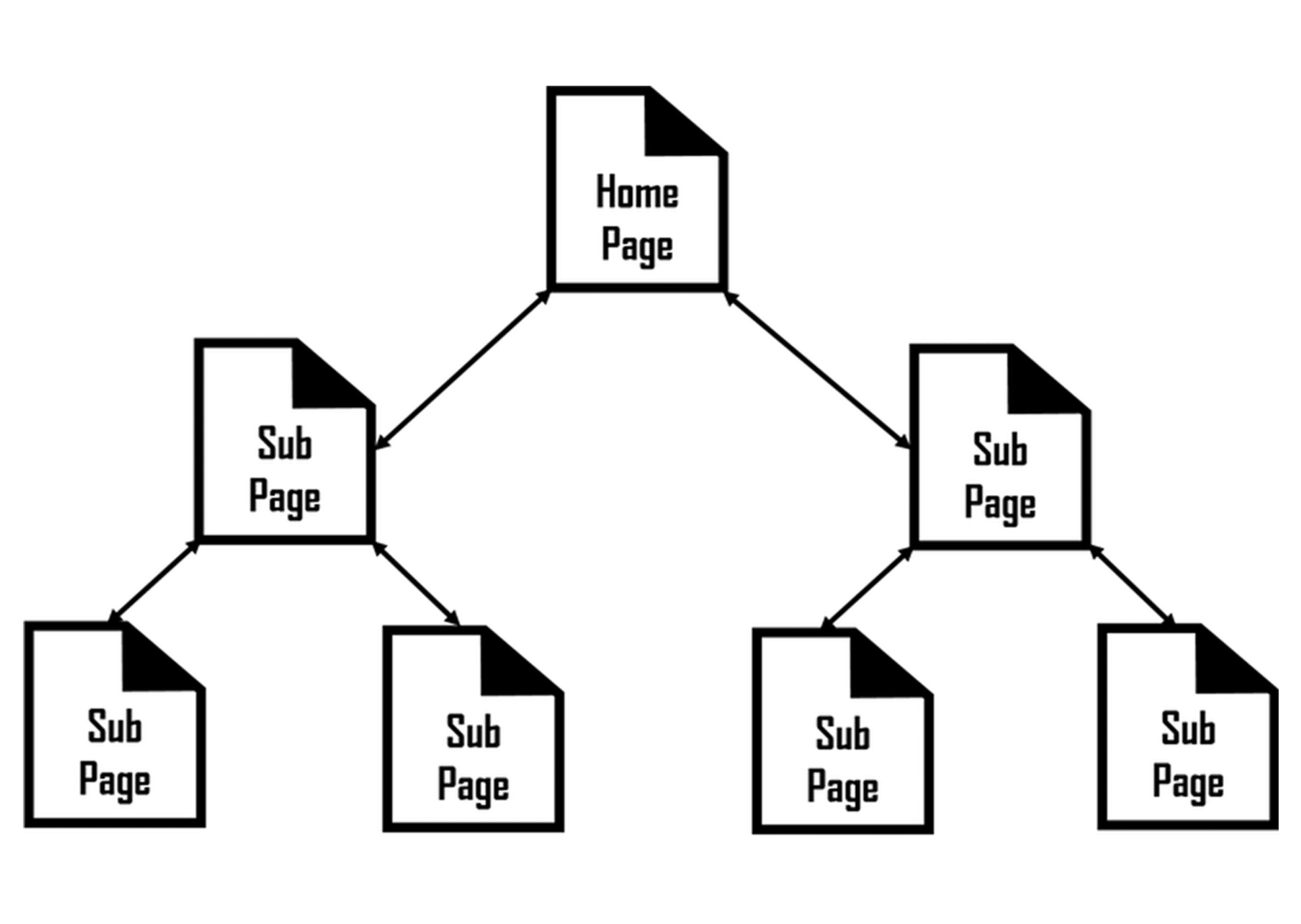
Existing website vs. new website
How we approach the tree structure depends on whether the project is a redesign or a completely new website. For redesign projects, we start by reviewing the existing website. We analyze what works, what doesn’t, and where users may experience confusion or friction. This includes reviewing current pages, navigation, content grouping, and overall clarity. Based on this review, we decide which parts of the structure can stay, which should be simplified, and which need to be rethought. A redesign is not about copying the old site, but about improving clarity and fixing structural issues.
For new websites, the tree structure is created entirely from scratch. Using insights from the initial meeting and workshop, we define the main sections, subpages, and content hierarchy. This helps prevent unnecessary pages and ensures the website remains focused, scalable, and purpose-driven.
Planning website content
Once the tree structure is defined, the next step is planning the content that will populate each page. Structure without content is just a skeleton — content is what gives the website meaning. At this stage, we clearly define what content is needed, in what form, and who is responsible for preparing it. When we talk about content, we don’t mean text alone. Content includes text, images, photography, video, animations, illustrations, icons, and other multimedia elements that support the message and guide users through the website. Multimedia content is not decoration. It plays an active role in communication, influences how users perceive the brand, and helps explain complex ideas faster and more clearly than text alone.
Existing content vs. new content (text and multimedia)
In many cases, especially during redesigns, some content already exists. We review existing texts, images, videos, and other materials to determine what can be reused, updated, merged, or removed. This process often reveals outdated messaging, duplicated information, or media that no longer reflects the brand or its goals. This review includes written content as well as existing visual and multimedia assets. We assess whether photos and videos are still relevant, whether they support the message, and whether they meet quality, consistency, and technical standards.
New pages or new goals usually require new content. This can include service descriptions, landing pages, blog content, case studies, conversion-focused copy, as well as new photography, video content, animations, or custom visual assets. At this stage, we define what new content is needed, what role it plays, and how it supports the overall structure.
Who prepares the content?
Content preparation can take different forms, depending on the project and the client’s preferences.
- The client prepares the content – we provide clear guidelines, structure, and support
- We prepare the content – based on interviews, workshops, and agreed objectives
- A combined approach – where the client provides raw input and we refine, structure, and optimize it
The same applies to visual and multimedia content. Depending on the project, photos, videos, and other assets can be provided by the client, created by us, or developed through a combined approach. The goal is consistency. All content and multimedia elements should support the structure and message — not compete with them.

Defining the tone of communication
Content planning is also the phase where we define the tone of communication. This applies to both text and visuals. We align on how the brand should sound and feel: professional or relaxed, direct or conversational, bold or understated. The goal is a consistent tone across all pages, content types, and media formats. This includes:
- Textual tone – wording, sentence structure, level of formality, and messaging style
- Visual tone – photography style, video mood, color usage, and overall visual direction
- Consistency across media – ensuring text, images, and video tell the same story
Defining this early prevents mismatches between copy, visuals, and layout later in the process.
SEO considerations for existing and new content
All content planning is carried out with search engine optimization (SEO) in mind. Existing content is reviewed and adapted to meet current SEO best practices, including improvements to structure, clarity, keyword relevance, internal linking, and search intent alignment. This ensures that valuable content retains or improves its visibility while better serving users. New content is created with SEO as a foundational requirement, not as an afterthought. This means defining clear page intent, search-focused topics, logical heading structures, and content depth that supports both users and search engines. By integrating SEO considerations at the content planning stage, we avoid later rewrites and ensure that each page is built to perform from the moment it goes live.
Why structure and content planning matter
Tree structure, content planning, and tone definition directly impact usability, SEO, and the overall effectiveness of the website. When text, visuals, and multimedia are planned together, later phases become significantly smoother.
A clear structure, purposeful content, and consistent tone create a website that works — for users and for the business.
Laying the groundwork for the next phase
With the tree structure defined, content planned, and communication tone aligned, the project has a solid strategic foundation. Pages have clear roles, content has direction, and visual expectations are set. This allows the next phase to focus on layout and user experience, without having to question what belongs where or how it should feel. In the next article, we’ll dive into wireframing and explore how structure, content, and tone are translated into clear page layouts.
Send an inquiry