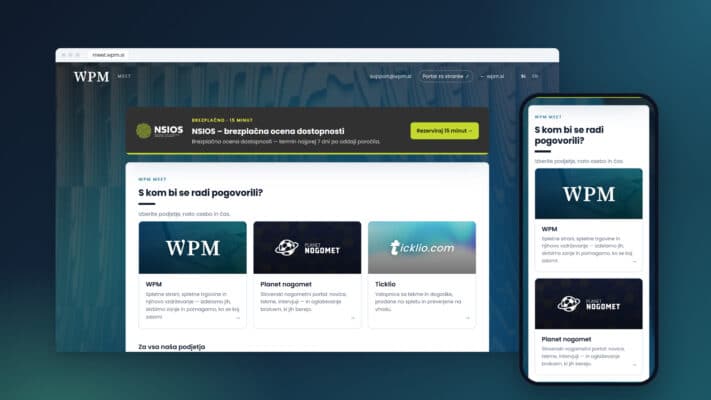
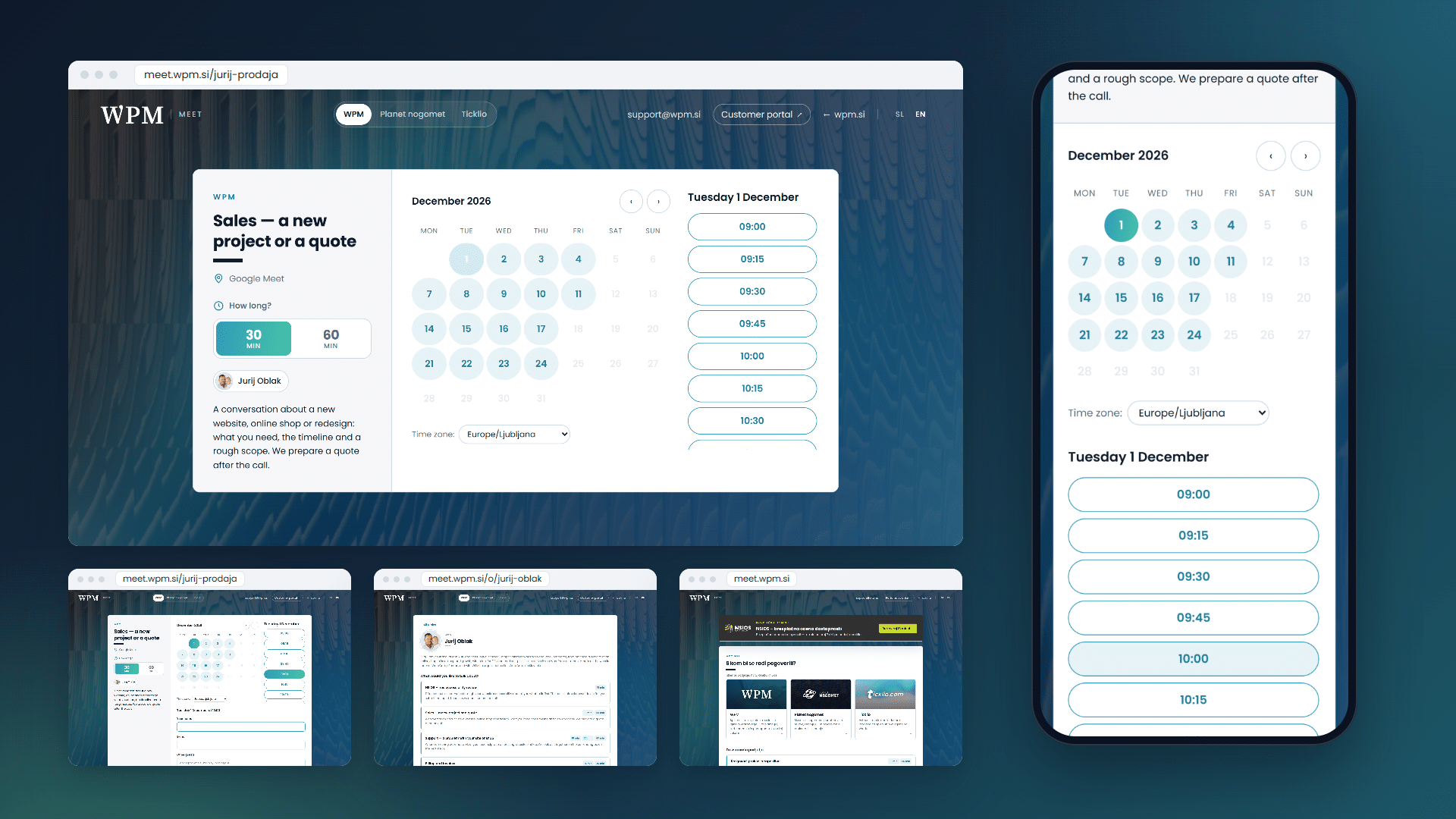
We built our own meeting booking system, and it’s live at meet.wpm.si. Three brands, four people, two languages and a direct connection to the calendars and internal systems we already use every day. Here’s why we built it instead of paying for one, and what it actually does.
Why Not Just Use an Existing Tool
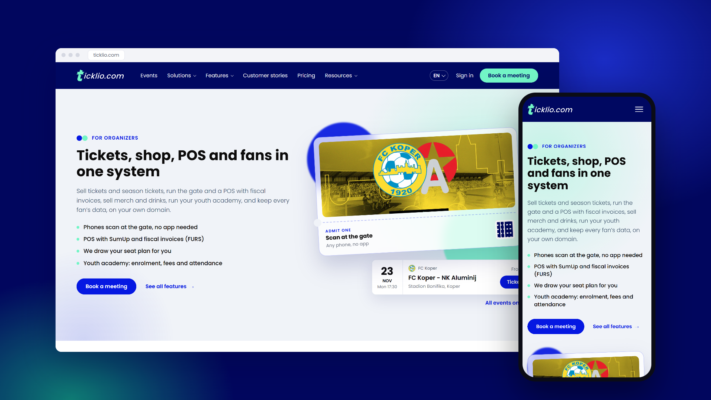
Booking tools are everywhere, and for a single person with a single calendar they work fine. Our situation was different. We needed one booking page that covers three brands: WPM for websites, online stores and maintenance, Planet nogomet for advertising and media partnerships, and Ticklio for ticketing. Each has its own identity, its own topics and its own people. Off-the-shelf tools charge per user, look like themselves rather than like us, and keep the data on someone else’s platform.
We build custom solutions for clients every day. At some point it made more sense to build this one for ourselves.
How It Works
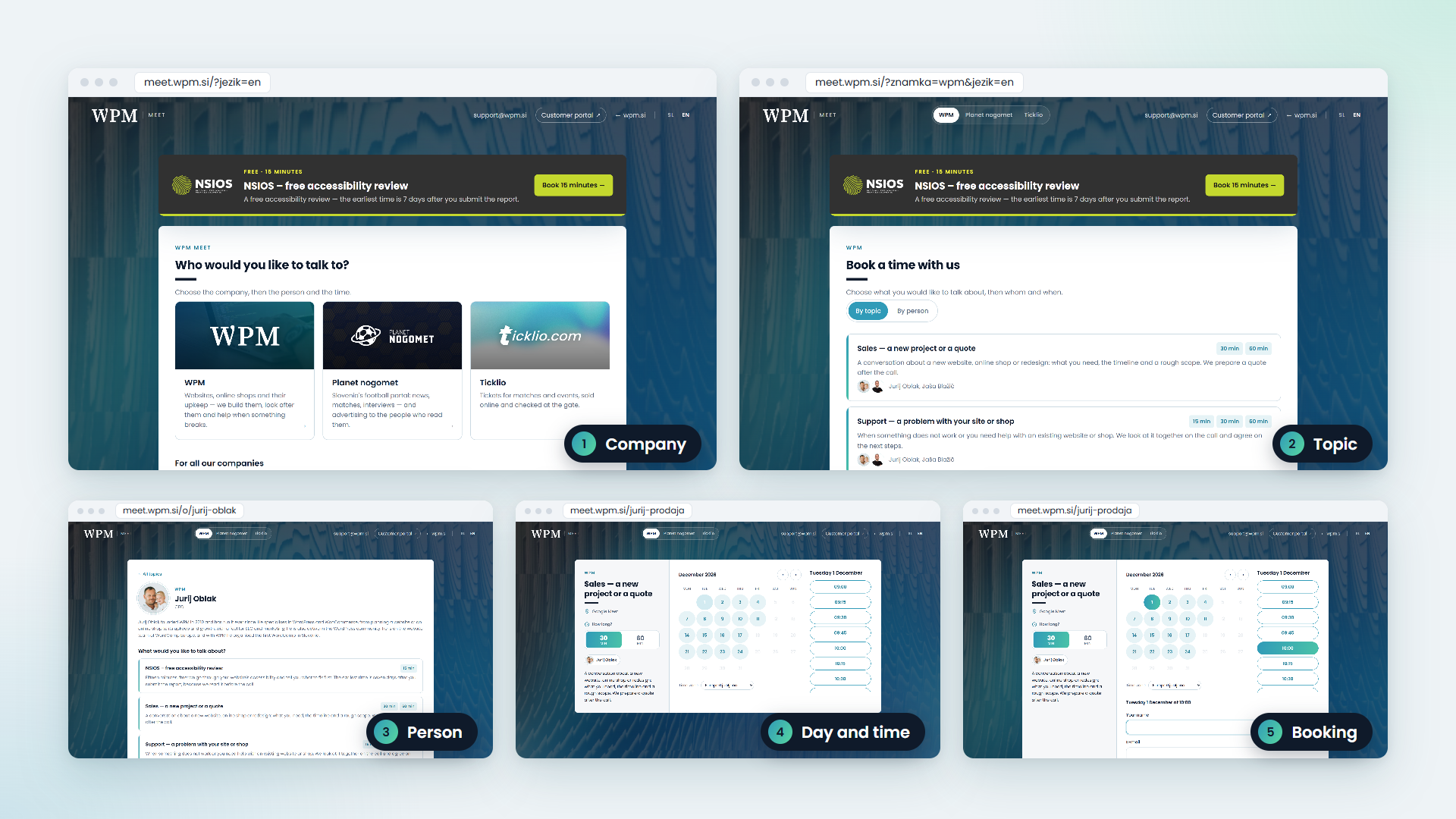
The flow is deliberately short: choose the company, choose the person, choose a time. Each person has their own topics, so a visitor doesn’t book a generic meeting but a specific conversation. Jurij takes new projects and offers, Jaša handles support and billing questions, David covers advertising and marketing, Nik takes Ticklio presentations and event support.
Meeting lengths depend on the topic. A free accessibility review is 15 minutes, a job interview or an internship conversation can be 30 or 60 minutes.
Part of Our Own Internal System
The booking page isn’t a separate tool. It’s built as part of the internal system we developed ourselves and work in every day, which is what makes everything around it straightforward. A booking isn’t just a calendar entry. It’s the start of a conversation that often continues as an offer, a project or a support ticket, so the meeting and everything that follows stay in one place. Nobody has to remember to check another tool.
Confirmation and Calendars
Once a time is chosen, both sides get a confirmation email, and the meeting goes straight into the calendar on both ends. It works with the calendars people already use, Google and Apple included, so there’s no copying details by hand and no separate app to install. Availability reflects what’s actually in someone’s day, which means no double bookings and no back and forth over email looking for a slot that works.
Built for How We Actually Work
A few smaller details make a real difference day to day:
- Two languages. The whole flow works in Slovenian and English, so international clients book the same way as domestic ones.
- Brand preselection. A link can open straight on a specific brand, which we use in campaigns and email signatures so the visitor skips a step.
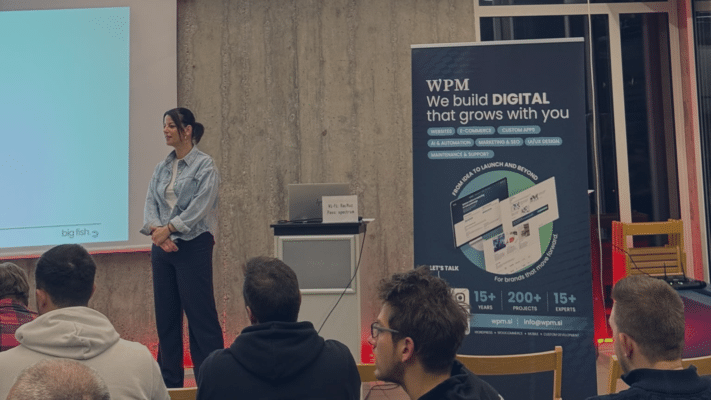
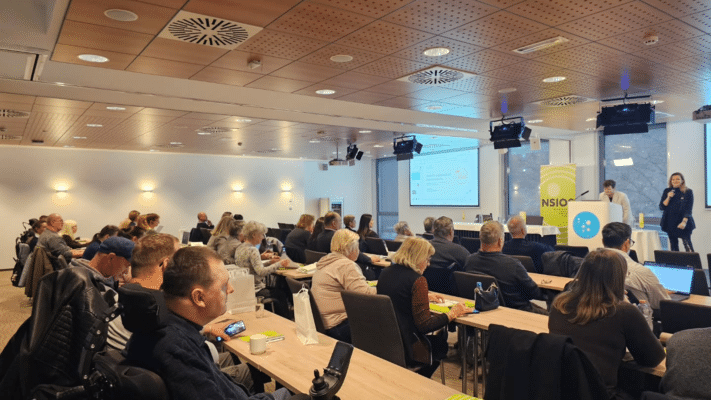
- Dedicated flows. Some meeting types have their own rules, like the free accessibility review we offered after our talk at the NSIOS conference, where the first available slot opens seven days after a report is submitted.
- Our own look. The page is ours, not a third-party tool with our logo in the corner.
Looking Ahead
The point of this project wasn’t the booking form. It was removing the friction between someone deciding to talk to us and that conversation actually happening. If your business has a similar problem, where an off-the-shelf tool almost fits but not quite, that’s exactly the kind of thing we build. Custom development doesn’t always mean a large project. Sometimes it means one system that does precisely what your team needs, and nothing else.
Book a meeting and see it for yourself.