July marks the start of the WordPress 7.1 release cycle. Beta 1 arrives on July 15, weekly betas follow through the end of the month, and the final release is scheduled for August 19, 2026 – timed with WordCamp US. Meanwhile, WordPress 7.0.1 was released on July 9 as a maintenance release, bundling 13 Core fixes and 13 Gutenberg fixes.
From responsive styling and new blocks to AI-ready infrastructure and WordPress Playground improvements, here’s a quick overview of the most important developments from the past month.
WordPress 7.1: Mark Your Calendars
The 7.1 release cycle now has a confirmed schedule:
- Beta 1 – July 15
- Beta 2 – July 22
- Beta 3 – July 29
- Release Candidate 1 – August 5
- Final release – August 19, 2026, during WordCamp US
The Roadmap to 7.1 also lists several new blocks – Playlist, Table of Contents, and Tabs – along with pseudo-state styling and performance improvements. For plugin and theme developers, the next few weeks are the window to catch compatibility issues while they are still cheap to fix.
Responsive Styling Is Ready for Testing
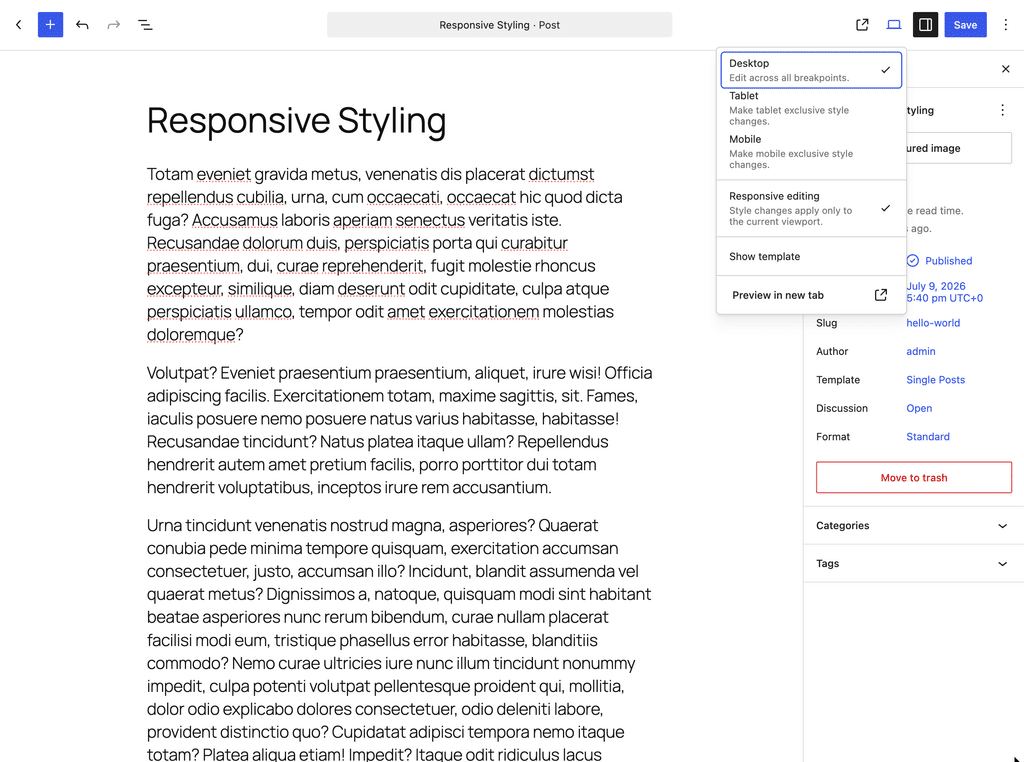
After months of development, responsive styling has reached an official call for testing. Blocks can now be styled per viewport directly in the editor, and Gutenberg 23.5 replaces the fixed desktop/tablet/mobile preview toggle with a unified, freely resizable device preview.
For designers and content teams, this means much finer control over how websites look on every screen size – without custom code. Blocks using standard block supports get responsive styles automatically, while blocks with custom controls will need updates from their developers.
AI-Ready Foundations: Abilities and Knowledge
Two merge proposals show where WordPress is heading. The first expands the Abilities API with the first practical Core abilities for reading settings, content, and users – all read-only and built on existing permission checks. The second introduces a Knowledge system – a single place to store site guidelines, memories, and notes, with permissions and revisions built in.Together with the AI Client gaining streaming and embeddings support in 7.1, WordPress is steadily building the infrastructure that AI and automation features will rely on. The focus remains on solid foundations for developers rather than flashy user-facing AI features – a direction we welcome.
React 19: Time to Test Your Plugins
After June’s temporary revert, the React 19 story has moved from “watch” to “test.” Gutenberg 23.4 ships an experimental flag that swaps the React 18 bundles for React 19 at runtime, simulating exactly what plugins will face when WordPress makes the jump. Compatibility warnings now appear in the console whenever a plugin relies on removed legacy internals. For agencies maintaining client websites, this is the moment to verify that critical plugins are ready – every issue caught now is a problem avoided later.
Better Media Handling Continues
The media improvements from June kept moving forward. GIF uploads can now generate video companion files, HEIC and HEIF uploads are accepted even without server-side editing support, and upload queues in Gutenberg 23.4 are now offline-resilient. There’s also a small but welcome change for everyday users: the Media Library is getting infinite scrolling back, reversing a removal that dates all the way to WordPress 5.8 – this time with a user opt-out option.
WordPress Studio Arrives on Linux
WordPress Studio had a big month: version 1.10 added long-awaited Linux support, and version 1.11 introduced Studio Code, an agentic development tool built into the desktop app. Usage is free during the beta phase, making Studio an increasingly complete environment for local WordPress development.
WordPress Playground Keeps Maturing
WordPress Playground shipped five releases during the window. Blueprint authors received practical upgrades like activation options and error handling for plugin installs, Personal Playground gained MCP support that lets AI agents work with the Abilities API directly, and it’s now even possible to open your Personal Playground from another device over WebRTC.
Looking Ahead
July’s updates make the direction clear: WordPress 7.1 is on track for August 19, responsive styling is finally in users’ hands, and the platform is quietly building the foundations for AI and automation – all while staying true to its open-source roots.
With Beta 1 landing mid-July, now is the time for agencies and developers to start testing – and for website owners to make sure their sites are ready for what’s coming in August.