WordPress June 2026 Update: WordPress continues to evolve at an impressive pace, and June 2026 brought several important updates for developers, agencies, and businesses building on the platform.With WordPress 7.0 now officially released and early work already underway for WordPress 7.1, the ecosystem continues to move toward better editing experiences, improved media handling, stronger developer tools, and greater flexibility for modern websites.
From Gutenberg improvements and collaborative editing efforts to WordPress Playground updates and React compatibility, here’s a quick overview of the most important developments from the past month.
Better Media Editing Inside WordPress
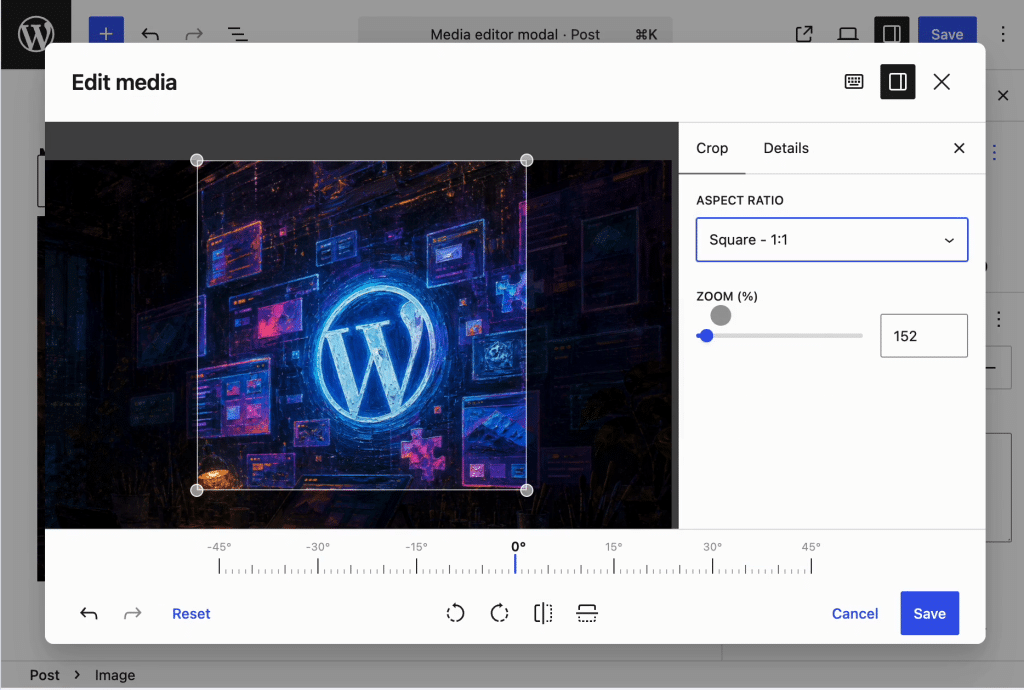
One of the biggest changes in Gutenberg 23.3 is the new media editor modal, which becomes the default image editing experience inside the block editor. Users can now crop, rotate, zoom, flip images, adjust aspect ratios, and edit metadata within a dedicated interface. For content creators and marketing teams, this means a faster and more streamlined publishing workflow.
Client-Side Media Processing Moves Forward
WordPress is also continuing work on client-side image processing, allowing image sub-sizes to be generated directly within the browser when possible while still supporting server-side processing as a fallback. This approach could improve performance and efficiency, especially as modern image formats such as WebP, AVIF, HEIC, and JPEG XL become more widely adopted.
Real-Time Collaboration Is Getting Closer
Collaborative editing remains one of the most anticipated WordPress features. While it did not make it into WordPress 7.0, early testing efforts for WordPress 7.1 are already underway. The goal is to allow multiple users to work within the same content experience more effectively, making WordPress a stronger solution for publishers, agencies, and larger content teams.
What Developers Should Watch
For plugin and theme developers, React 19 compatibility remains an important topic. Although the initial upgrade was temporarily reverted, developers are encouraged to review their codebases and prepare for future compatibility requirements.
There were also updates regarding PHP support. WordPress 7.0 now requires PHP 7.4 as the minimum supported version, while PHP 8.3 remains the recommended production environment. Both WordPress 6.9 and 7.0 are now documented as fully supporting PHP 8.5.
For agencies managing multiple client websites, these updates provide clearer guidance when planning infrastructure upgrades and long-term maintenance.
More Flexibility for Theme Builders
Theme developers received several useful enhancements through Gutenberg 23.3, including support for pseudo-state styling on individual block instances. This allows developers to create unique hover, focus, and visited states without affecting every instance of a block across the website. Responsive styling capabilities also continue to expand, providing greater control over user experiences across devices.
WordPress Playground Continues to Grow
WordPress Playground continues to mature as a powerful development and testing environment. June brought updates that further position Playground CLI as the preferred alternative to the older wp-now tooling. New documentation and workflow improvements also make Playground increasingly useful for local development, testing, demonstrations, and educational purposes.
Looking Ahead
June’s updates show a clear direction for WordPress: better media workflows, stronger developer tools, more flexible design options, and continued investment in collaboration and usability.
With WordPress 7.0 now released and WordPress 7.1 already in development, the platform continues to evolve while staying true to its open-source foundations.