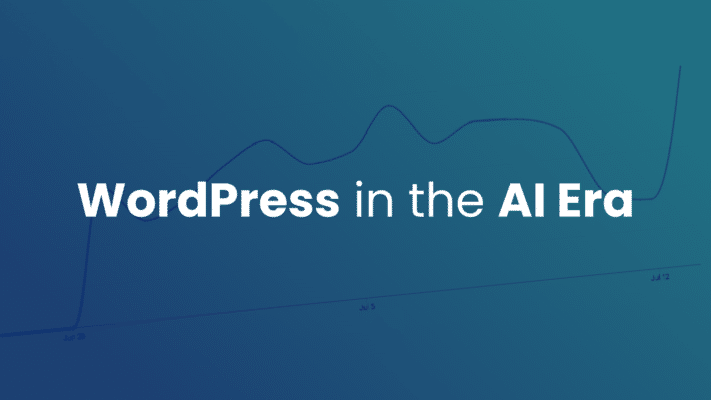
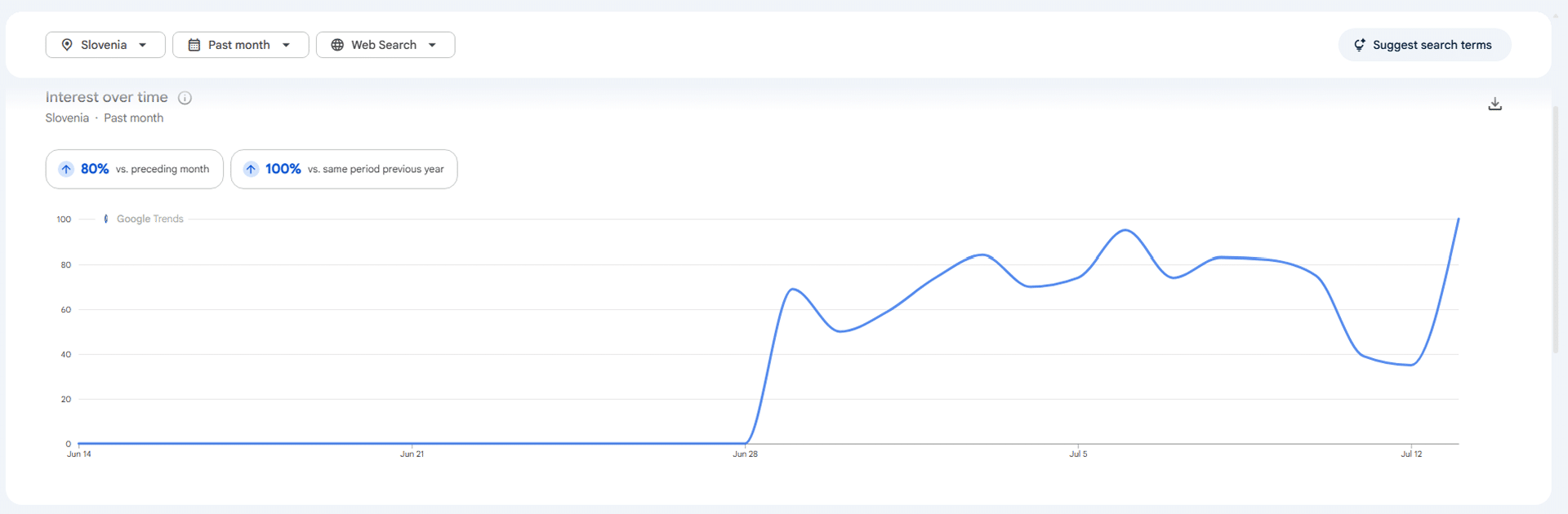
WordPress was supposed to be the first casualty of AI. AI site builders, vibe coding tools, agents that generate a whole website from a single prompt – the script seemed written. And yet, Google Trends tells a different story: after a decade of declining search interest and a flat floor since 2021, searches for WordPress are climbing again in 2026, back to levels last seen years ago.
Meanwhile, WordPress still powers around 42.5% of all websites and holds nearly 60% of the CMS market – roughly nine times more than its closest competitor. So what’s going on? We see two things.
AI Creates New Builders Faster Than It Replaces Old Tools
The first dynamic is simple: AI is turning millions of non-technical people into builders. People who never called themselves developers are suddenly shipping things – prototypes, landing pages, small tools.
But sooner or later, they need a real website. One with hosting, a domain, a contact form, and a way to update content without asking anyone for help. And when they search for how to do that, they don’t land on the newest tool. They land on the one with 20 years of tutorials, documentation, and community answers – because that’s what both search engines and AI chatbots point them to.
AI didn’t shrink the pool of people who need websites. It made the pool bigger.
The Most Documented Platform Gets the Biggest AI Boost
The second dynamic is the one that should interest anyone building digital products: large language models are best at whatever they saw most in their training data.
There is more written about WordPress than about any publishing platform in history. Ask an AI assistant to fix a WordPress issue, and it performs like a senior developer. Ask it about a tool launched last year, and it guesses.
The result is counterintuitive but logical: the platforms with the deepest documentation and the largest ecosystems come out of the AI wave stronger, not weaker. In the AI era, the moat is not a feature list – it’s how much quality knowledge about your platform exists for the next model to learn from.
WordPress Isn’t Standing Still Either
While the trend line was climbing, the platform itself has been quietly preparing for the AI era. As we covered in our July 2026 WordPress update, the Abilities API gives AI agents a safe, permission-aware way to work with WordPress sites, the AI Client coming in WordPress 7.1 adds streaming and embeddings support, and the plugin ecosystem is already shipping agent-ready features – from AI-assisted page builders to tools that make site content readable for AI assistants.
The open-source model that made WordPress the most documented platform on the web is now the same model making it one of the most AI-ready ones.
What This Means for Website Owners
For businesses deciding where to build, the lesson is worth pausing on. AI builders are impressive for getting something online in minutes. But a website is a long-term asset, and the questions that matter come later: Do you own your content? Can you move it? Can you extend it? Will the tools you depend on still exist in five years?
A properly built WordPress website answers all four – and now, thanks to its unmatched documentation, it’s also the platform where AI assistance works best. That combination of ownership, flexibility, and AI compatibility is exactly why the trend line is pointing up again. And if you’re wondering how AI fits into your own business, that’s a conversation we’re happy to have.
Looking Ahead
Nobody would have predicted this chart two years ago. But it makes sense: AI creates content, tools, and businesses that all need somewhere to live – and WordPress remains the simplest, most open publishing infrastructure at scale.
The platforms that survive technological waves aren’t always the newest ones. Sometimes they’re the ones the whole internet already knows how to use.